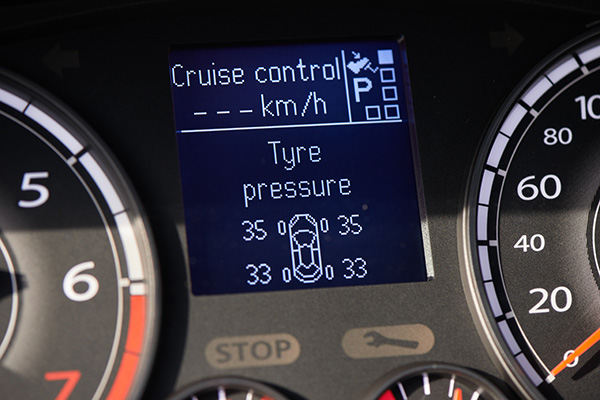
Your tire pressure monitoring system (TPMS) is supposed to help you stay safe by alerting you when a tire is underinflated. But what if the warning light comes on and your tire pressure is perfectly fine? It’s not uncommon for drivers to see that TPMS warning and check their tires, only to find everything looks normal. So what’s going on? The answer might be that your sensor isn’t telling the whole truth.
Let’s look at how this system works, what can cause it to give false warnings, and how to tell when it's the sensor, not the tire, that’s the real issue.
What Does the TPMS Actually Monitor
Most modern vehicles are equipped with direct TPMS. This type uses a pressure sensor mounted inside each wheel, typically as part of the valve stem. These sensors measure the actual air pressure in the tire and send that data to the car’s computer. When one or more tires drop below a certain threshold, usually around 25 percent below the recommended pressure, the warning light turns on.
There’s also indirect TPMS, which is less common but still used on some models. Instead of reading pressure directly, it uses the ABS system to detect changes in wheel speed. A tire with low air pressure spins slightly faster, which the system recognizes as a problem.
When the Light Is On but Pressure Is Fine
This is where drivers start to doubt their TPMS. You see the warning on the dashboard, but your tires look good and feel firm. You pull out a pressure gauge, check all four tires, and find they’re well within the recommended range. So why is the warning still there?
One common cause is a faulty sensor. These components have batteries that can wear out over time, especially in colder climates. When the battery dies or the sensor malfunctions, the system may not receive a signal. In some vehicles, that triggers the same warning light used for low pressure. The light is no longer about the tire, but about the system not getting data at all.
Cold Weather Confusion
Temperature changes also play a role. Tire pressure naturally drops when the weather turns colder. A tire that was properly inflated yesterday may register as low this morning. Some sensors are more sensitive than others and may trigger a warning for just a couple of PSI below the threshold.
The best time to check tire pressure is when the tires are cold, before driving. Use a trusted gauge and compare the readings to the recommended numbers on the sticker inside your driver’s door. If all four tires are evenly inflated and only slightly low, the warning may clear on its own once the tires warm up from driving.
Other Signs Your TPMS Might Be Off
Inconsistent warnings are another clue. If the light turns on and off at random, or shows up every few days without any pressure loss, your TPMS sensor may be glitching. Some vehicles will also display specific tire pressures on the dashboard. If one tire shows as blank or gives a reading that jumps around while the others are stable, that’s another red flag.
Corrosion or damage to the valve stem sensor can also cause problems. If you've recently had tires mounted or rotated and the warning appeared soon after, the sensor might have been damaged or knocked loose during service.
How to Confirm the Problem
A handheld tire pressure gauge is your best friend here. Compare each tire’s pressure to the door placard. If everything checks out and the TPMS light is still on, the issue is probably with the sensor or the system itself.
Some vehicles can identify which tire has the faulty sensor, especially if they show individual pressures. In other cases, you’ll need a diagnostic scan tool to read the fault codes. That scan can also confirm whether the TPMS module is functioning and communicating properly with the sensors.
Trust Don Lee's Tire & Auto for Accurate Tire Diagnostics
If your TPMS warning keeps coming on and nothing seems wrong with your tires, don’t ignore it. At Don Lee's Tire & Auto in Raleigh, NC, we can determine whether the problem lies in the tire or the sensor. Our technicians use professional tools to inspect the full system and ensure you’re not driving with faulty information.
Stop by for a quick pressure check, a TPMS reset, or a full inspection. You’ll leave with confidence, knowing your tires are safe and your sensors are telling the truth.