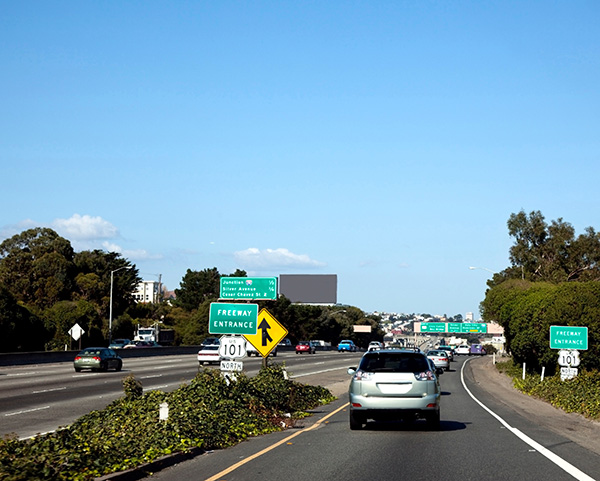
You're coming down the entrance ramp, a truck is beside you, and the lane looks shorter than you expected. That isn't the time to decide where you'll fit.
A smoother merge starts earlier. Read the traffic while you still have room to adjust, then match the pace of the lane you're joining when conditions allow. You need a workable opening and a clear view, not a last-second burst of acceleration.
Look for a Highway Gap Before the Ramp Ends
Scan the lane you're entering while continuing to watch the ramp ahead. Notice how fast traffic is moving and which opening leaves space both in front of and behind your car after you join. The gap beside you changes as both vehicles move.
Avoid locking your eyes on one mirror. The driver ahead on the ramp may slow, the road may curve, or the queue may extend back toward the entrance. Short checks of the whole scene give you more information than staring at one approaching car.
Use the Acceleration Lane for Speed Matching
When the entrance provides an acceleration lane, use it to prepare for the move. Joining far below the speed of flowing traffic forces vehicles behind you to close the gap quickly. Bringing your speed closer reduces that difference, provided the road, traffic controls, and conditions permit it.
A curved ramp or stopped highway queue needs a different pace from an open entrance. Don't accelerate toward brake lights just because the ramp usually leads to a fast road. Read what is happening today. Around Raleigh, traffic at the same entrance sometimes behaves very differently between an early trip and the afternoon commute.
Checking a Highway Gap Before Moving
Signal before changing lanes. Then check the mirrors and the blind spot while maintaining awareness ahead. A car near the rear quarter can sit outside your main mirror view, and a smaller vehicle is easy to miss in a hurried glance. The signal communicates your plan. It doesn't create a gap. Make the move smoothly once the opening is clear, and keep watching the vehicle ahead as you enter. If the space closes, adjust early instead of forcing the car into it because you've already signaled.
A large truck needs space around it and has areas where its driver has limited visibility. Pulling closely in front leaves less room for the truck's next stop. Running beside it as the ramp disappears also leaves you with fewer options. Choose the opening based on where the truck will be when you enter. Sometimes that means easing back and joining behind it. Avoid treating the merge as a race to reach the front bumper first. Your car needs a gap that remains large enough after everyone has settled into the lane.
Highway Merge Mistakes to Leave Behind
Watch for these habits:
- Looking for a gap only at the end of the ramp
- Entering much slower than flowing traffic
- Using the turn signal as permission to move
- Following another car into a gap without checking it yourself
- Cutting across painted separation areas
- Braking suddenly when an earlier speed adjustment was available
If you miss the entrance you intended or the road layout changes, follow the next safe route. Navigation can be updated once a passenger handles it or you're safely parked. A late correction across traffic creates more risk than a longer drive.
Merging Into Slow or Stopped Traffic
In congestion, match the conditions near the opening instead of chasing a highway speed that no longer exists. Leave room from the vehicle ahead on the ramp, signal your intent, and merge when the gap is clear. Follow any ramp signals or posted directions.
Smooth movement makes your path easier for surrounding drivers to read. Repeatedly surging forward and braking leaves them guessing. Once you're in the lane, rebuild a following interval that fits visibility and grip rather than immediately making another lane change.
When the Car Won't Accelerate Predictably
An engine that hesitates when you press the accelerator can make merging difficult. So does a transmission that lets engine speed climb without the expected acceleration. Have those symptoms checked before another highway trip, even if the car seems manageable on slower streets.
We'd want to know whether the hesitation appears cold, warm, or only under heavier load. We'd review stored fault information and test the engine or transmission according to that pattern. We'd also check for tire vibration, steering pull, or brake issues. The car should respond predictably before you ask it to join faster traffic.
Prepare the Driver's View Before Leaving
Adjust the seat and mirrors while parked, clean the glass, and set the route before you move. That keeps the ramp free of extra tasks. If a mirror won't stay in place or the windshield wipers leave heavy smears, fix it before visibility becomes a problem in traffic.
Give yourself time, too. Running late turns an ordinary merge into pressure to accept a gap you'd normally reject. A few extra minutes in the schedule leaves room to wait for a better opening.
Tire and Vehicle Service at Don Lee's Tire & Auto
Don Lee's Tire & Auto in Raleigh, NC, can check tire vibration, pulling, or acceleration concerns that make highway driving harder. Tell us when the car feels unpredictable so we can test it under those conditions.
Call Don Lee's Tire & Auto to arrange vehicle service before your next highway trip.