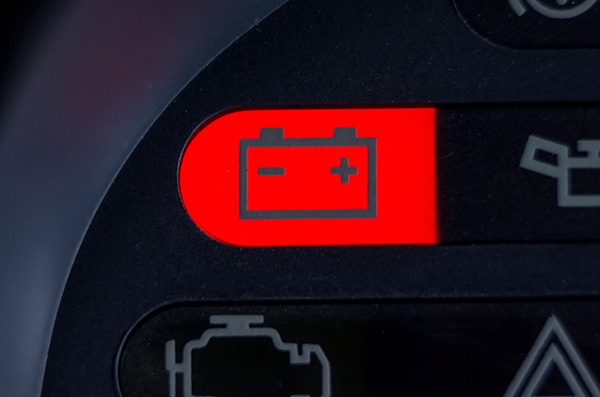
That battery light can flip on at the worst possible time, right when you’re merging, running late, or driving at night with everything powered up. The car may feel normal for a minute, which is what makes it so stressful. You’re stuck wondering if it’s a false alarm or the start of a shutdown.
The faster you sort out whether it’s the alternator, the battery, or something supporting the charging system, the better your odds of avoiding a tow.
What The Battery Light Is Actually Warning You About
Most drivers see the word battery and assume the battery is failing. In many cases, the light is really saying the charging system is not keeping voltage where it should while the engine is running. The alternator powers the vehicle and recharges the battery after starting.
If the alternator output drops, the car begins running on battery reserve. That reserve can keep things going briefly, but once voltage falls far enough, systems start acting odd. Eventually the engine can stall, and it may not restart.
Battery Vs Alternator: The Difference That Clears Up Confusion
A battery’s job is to provide a big burst of power to start the engine and stabilize voltage. An alternator’s job is to keep the electrical system supplied once the engine is running.
A weak battery usually shows itself when starting. You hear slow cranking, or you get a click with no crank. An alternator problem often shows itself while driving because the car cannot keep up with electrical demand.
There is overlap, though. A weak alternator can drain a good battery. A failing battery can make the alternator work harder. That’s why the right fix starts with testing, not replacing the most obvious part first.
What You Might Notice Right After The Light Turns On
Sometimes the warning comes with clear symptoms. Other times it starts quietly and gets worse as voltage drops.
- Headlights dim or pulse, especially at idle or when you stop
- The blower fan slows down, or the cabin air changes strength on its own
- The dashboard display flickers, resets, or acts glitchy
- The engine stumbles, idles roughly, or feels weak when you press the gas
- Power features like windows and locks slow down or behave inconsistently
If you notice multiple symptoms stacking up, treat it as a sign that the battery reserve is being used up.
Common Causes That Are Not A Dead Alternator
Yes, alternators fail, but several other problems can trigger the same warning.
A slipping serpentine belt is a big one. If the belt is worn or the tensioner is weak, the alternator may not spin fast enough under load. You might notice a squeal at startup or when electrical demand increases.
Connections matter too. Corrosion at the battery terminals, a loose connection, or a weak ground can create a voltage drop that confuses the system. That can trigger the light even when the alternator itself is capable of output.
There are also situations where the alternator is fine, but the internal voltage regulator is failing. That can cause unstable charging. In some vehicles, wiring issues or a failing sensor can also create misleading warnings, especially if the problem is intermittent.
We’ve seen plenty of cases where the alternator got blamed, and the real fix was a belt issue or a bad connection that was quietly heating up and losing contact.
Is It Safe To Keep Driving?
If the light comes on and everything feels normal, you may have a short window. The key is not pushing your luck.
If it’s daytime and you are close to home or a repair shop, it is usually safer to head straight there and limit electrical load. Turn off extra accessories that are not necessary. Keep driving simple and direct.
If the light is on at night, or you start losing headlights, blower power, or the dashboard begins flickering, do not keep driving and hope it clears. Voltage can drop quickly once it starts falling. Pull over somewhere safe and arrange help.
If you smell burning rubber or notice smoke, stop driving. That can point to belt slip or an overheated connection, and that is not something to ignore.
What A Proper Charging System Test Looks Like
A real diagnosis checks more than one number. Voltage at idle is helpful, but it does not tell the whole story.
A proper check looks at alternator output under load, battery condition, and voltage drop across cables and grounds. It also includes a visual inspection of the belt, the tensioner's behavior, and the connection condition. If the issue is intermittent, scan data and repeated load tests can help catch a regulator that is failing only when hot.
At Don Lee's Tire & Auto, we focus on confirming the cause before recommending parts, because a charging warning can come from several places that look similar from the driver’s seat.
Get Battery Light Diagnostics in Raleigh, NC, with Don Lee's Tire & Auto
We can test your battery and alternator under real electrical load, inspect the belt drive system, and check cables and grounds for voltage drop that can trigger the warning. We’ll pinpoint what caused the battery light to come on and help you fix it before it turns into a no-start or a roadside stall.
Call Don Lee's Tire & Auto in Raleigh, NC, to schedule charging system diagnostics and get your electrical system back to reliable.