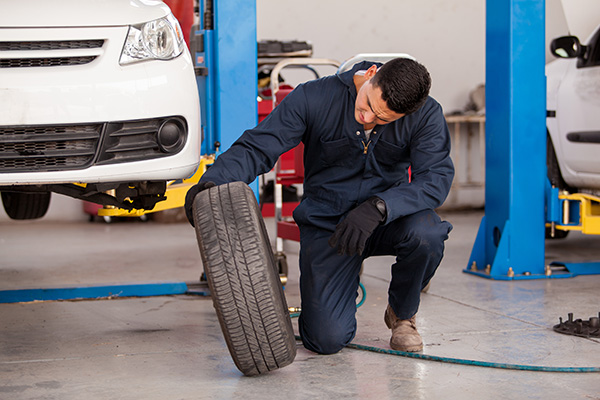
Tires rarely fail the same way a light bulb does. They do not always work perfectly one day and quit the next. Most of the time, they wear down quietly while the car still feels normal enough to drive.
That is what makes tire replacement easy to put off.
A tire can look decent from a few feet away and still be too worn, too old, damaged, or uneven to trust for daily driving. Knowing what to look for helps you replace tires before they affect braking, handling, or wet-road traction.
Check The Tread Depth First
Tread depth is the easiest place to start. The tread grooves help move water away from the tire so the rubber can stay in better contact with the road. As the tread gets shallower, the tire has less ability to handle rain, standing water, and quick stops.
Many tires have built-in wear bars inside the grooves. When the tread is level with those bars, the tire is at the end of its usable life. You can also use a tread depth gauge for a more accurate reading.
Do not check only one spot. Tires can wear unevenly, so measure the inside, center, and outside tread areas. A tire with decent tread in the middle but a worn inner edge is not in good shape.
Look For Uneven Wear Patterns
Uneven tire wear can say more than the tread number alone. Inside-edge wear can point to alignment trouble. A cupped or choppy tread can result from worn shocks, struts, or loose suspension parts. One tire wearing faster than the others usually has a reason.
If you replace tires without fixing the cause of uneven wear, the new set can start wearing the same way. That gets expensive fast.
During regular maintenance, tire wear should be checked closely, not just glanced at from the outside. The worst wear often hides on the inner edge, where drivers do not see it during a quick walkaround.
Pay Attention To Cracks, Bulges, And Damage
Tires age even when the tread is not completely worn out. Heat, sunlight, road salt, age, and low pressure can dry the rubber and create cracks in the sidewall or between tread blocks.
A bulge is more serious. It can mean the tire’s internal structure has been damaged, often from a pothole, curb hit, or road impact. A tire with a sidewall bubble should be replaced, not watched for a few more weeks.
Cuts, exposed cords, missing chunks of rubber, or repeated air loss are also signs that the tire needs attention. Some punctures can be repaired safely, but sidewall damage usually cannot.
Wet Roads Make Weak Tires Easier To Notice
Old or worn tires often show their weakness in the rain first. The car may slide more easily, take longer to stop, or feel less steady through puddles. You might notice traction control activating more often than before.
That is not just bad weather. It can be the tire telling you the tread no longer has enough grip for the conditions.
North Carolina rain can quickly turn a worn tire into a real problem, especially during hard braking or lane changes. If the car feels nervous on wet roads, the tires should be inspected before the next storm does the testing for you.
Vibration Or Noise Can Be A Tire Clue
A tire problem does not always show up as visible wear. Sometimes it shows up as vibration, humming, thumping, or a pull at certain speeds. Tire balance, separated belts, uneven wear, bent wheels, and alignment issues can all change how the car feels.
A vibration that gets worse on the highway is worth checking. So is a tire noise that was not there before. Drivers sometimes get used to the sound little by little, then realize how loud it had become only after the tire is replaced.
An inspection can help separate tire trouble from suspension, wheel bearing, or brake problems.
Age Still Counts, Even With Tread Left
Some vehicles do not get driven many miles, so the tires keep their tread for years. That does not mean the rubber is still healthy. Older tires can harden, crack, and lose grip before they look completely worn out.
The tire date code can show when the tire was made. If the tires are several years old, especially if they show visible cracking or weathering, they deserve a closer look. Age matters even more for vehicles that sit outside, sit for long periods, or are used only for short trips.
Tires are not only about passing a quick tread check. They have to stay flexible enough to grip the road.
Get Tire Replacement In Raleigh, NC, With Don Lee's Tire & Auto
If your tires are worn, cracked, noisy, losing air, or making your vehicle feel less steady in the rain, Don Lee's Tire & Auto in Raleigh, NC, can check the tread, tire age, pressure, alignment wear, and overall condition.
Schedule a visit and find out whether your tires still have safe life left or it is time for a new set.