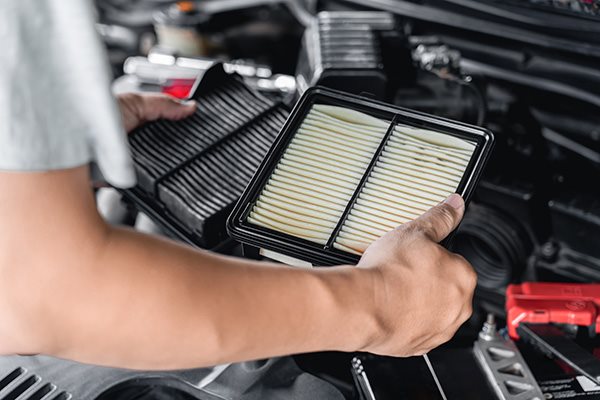
An engine air filter often gets overlooked because you rarely see it and it usually makes no sound. Eventually, however, the element collects enough dust and debris that it needs replacement. Waiting too long can restrict airflow or allow contamination through damaged material. Changing it too early adds cost without a clear benefit. The right decision comes from the manufacturer's schedule, the filter's condition, and the way you drive.
What the Engine Air Filter Protects
The filter sits between outside air and the engine's intake system. Its job is to capture particles that would otherwise reach sensors, intake passages, and the combustion chambers. Proper filtration protects components exposed to high airflow and keeps abrasive dirt away from moving engine parts. The air box and its seals are part of that protection, not merely plastic covers around a paper element.
A damaged or poorly seated filter sometimes allows unfiltered air to bypass the media. This creates a different risk from a gradually clogged filter. During an inspection, we check the element fit, air-box closure, and debris buildup. A correct installation protects the engine between routine maintenance appointments.
Use the Manufacturer's Interval as a Starting Point
Some vehicle makers specify replacement at a mileage or time interval and inspection at earlier services. Other schedules depend more heavily on operating conditions. There's no single number that fits every engine and air-filter design. Raleigh commuting, frequent construction dust, and regular rural travel all expose an intake system to different levels of debris.
A filter that has reached the manufacturer's replacement interval should be serviced even if the engine seems normal. Where inspection is recommended, condition helps guide the decision. You don't need to replace a serviceable element simply because it looks slightly gray. We compare the schedule with the element's actual condition and the service history before recommending work.
Reduced Acceleration Can Be One Sign of Restriction
A heavily clogged filter limits incoming air when the engine demands high flow. The result sometimes feels like weak acceleration during highway merging or climbing. That symptom usually appears under higher loads, not necessarily while idling in a parking lot. Modern computers adjust fuel delivery in response to airflow, so a dirty filter doesn't automatically create a major fuel-economy loss on fuel-injected vehicles.
If your car accelerates poorly, the intake filter is only one possibility. Fuel pressure issues, ignition faults, exhaust restrictions, and electronic throttle problems create similar symptoms. An inspection should look at the whole pattern before replacing the filter as the only test. A fresh filter helps when airflow restriction is the cause, but other faults need their own repair.
Inspect for Dust, Moisture, and Damaged Seals
A filter exposed to unusual dust or water may require replacement earlier than normal. Saturated media can deform, while damaged folds or seals allow debris to pass around the edge. Leaves and other material inside the air box create restrictions too. A quick look at the exposed side of the filter doesn't always reveal what's happening deeper in the housing.
We examine the filter and box for water marks, broken clips, missing seals, and excessive buildup. If water enters the intake during flooding, don't assume replacing the element makes the engine safe to start. Water ingestion can cause internal damage, so the vehicle needs a more careful inspection. That situation differs from ordinary filter maintenance on a dry, dusty road.
Why a Check Engine Light Isn't a Reliable Filter Reminder
Many cars don't monitor air-filter restriction directly. An element can become dirty without triggering any dashboard warning. Conversely, the check engine light often relates to sensor circuits or fuel control, not the filter itself. Some intake faults appear after a filter service because a hose wasn't reconnected or the air-box lid failed to seal. That timing helps identify what to inspect next.
Does the engine sound different immediately after an air-filter change? A new whistle or rough idle may point to a loose duct or disconnected sensor. We check those connections before recommending more parts. The correct maintenance visit includes checking that everything is refitted securely, especially on cars with complex intake plumbing.
How to Tell When Replacement Is Worthwhile
The decision should account for mileage, driving environment, and visible damage. A filter loaded with debris, torn at the seal, or well past its specified interval calls for replacement.
A lightly dusty element still inside its scheduled life may be fine. Avoid trying to improve a disposable element by blasting it with compressed air, as this can damage the media and reduce filtration performance.
Watch for these clues:
- Service overdue by the vehicle's published schedule
- Heavy debris or moisture inside the air box
- A torn element or damaged sealing edge
- Sluggish acceleration under heavy load
- Unusual intake noise after recent service
Not every symptom proves the filter is at fault. Use inspection findings to decide if replacement will correct a problem or simply complete routine maintenance.
Keep the Intake System Clean Between Services
A replacement filter needs to match the housing and manufacturer requirements. Correct fit and an undamaged seal help prevent fine dust from entering the intake. During the same visit, check nearby ducting and clamps for cracks or loose connections. Those items sometimes cause more trouble than the filter itself. Keeping a record of the service date and mileage prevents guessing at the next interval.
A clean, properly fitted air filter helps the engine receive the air it needs while keeping contamination out. If performance still feels weak afterward, other systems need targeted testing. The best maintenance plan handles the filter on schedule and investigates separate symptoms without treating every engine concern as a dirty element.
Get Engine Air Filter Inspection in Raleigh, NC, With Don Lee's Tire & Auto
Don Lee's Tire & Auto in Raleigh, NC, helps drivers check engine air filters, intake components, and service intervals. We'll explain whether replacement or further inspection is needed.
Call Don Lee's Tire & Auto or schedule your air filter service online today.